
Emotional Apperception

Emotional Apperception Puzzle

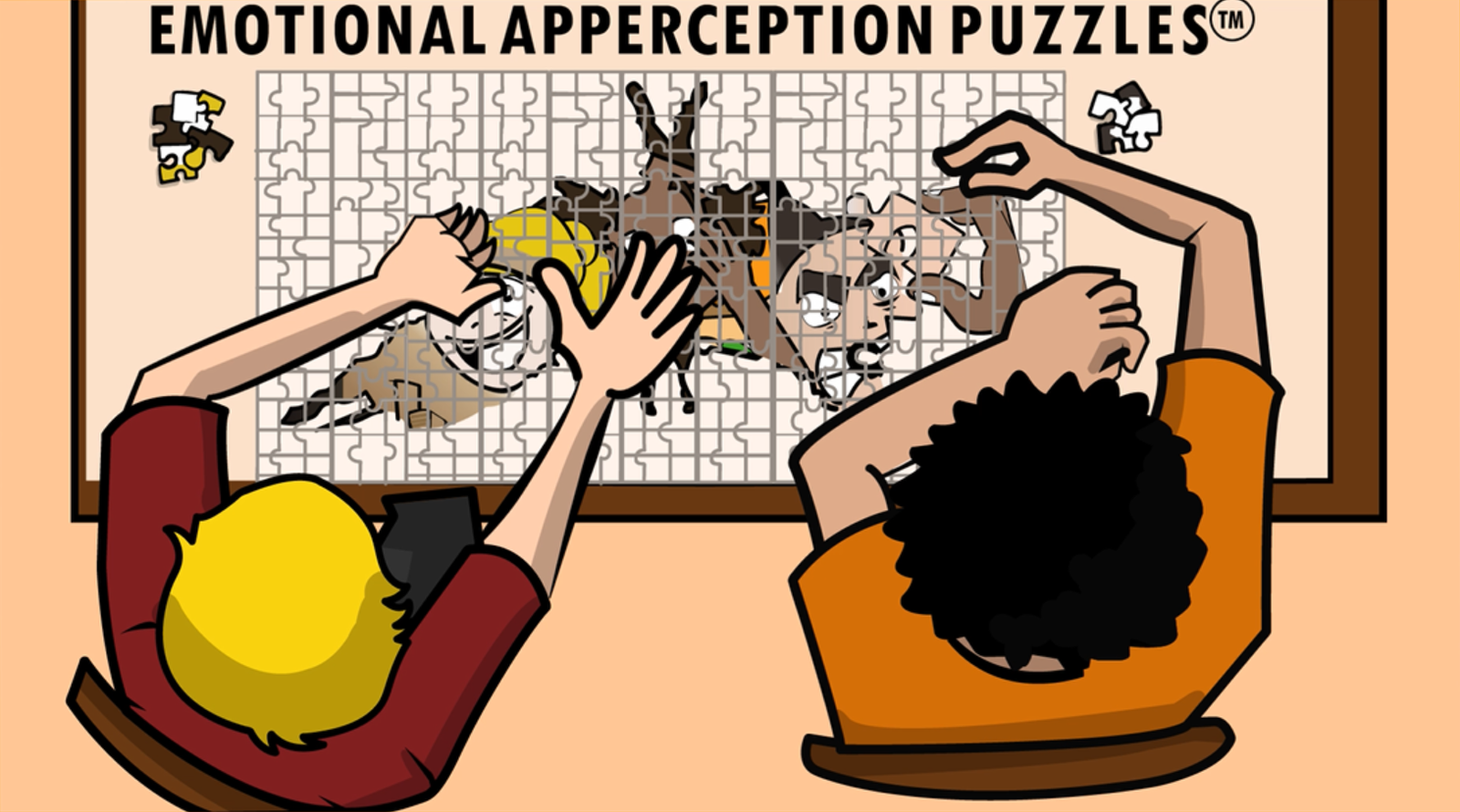
The Emotional Apperception Puzzle is a picture-based activity designed to help students explore emotions, relationships, and social situations through storytelling.

1. What is happening?

The child looks carefully at the picture and describes what they see. They identify the characters, their actions, expressions, body language, and the situation taking place.

2. What are the characters thinking and feeling?

The child describes how each character might be feeling and what they might be thinking. They explain why the characters may feel this way based on their expressions, actions, and the situation.

3. What happened before?

The child imagines what might have happened before the scene shown in the picture. They describe the events or circumstances that may have led to the current situation.

4. What happens next?

The child predicts what might happen after the picture. They explain how the story could continue, how the characters might respond, and how the situation might be resolved.

Purpose of the Activity

There are no right or wrong answers. The activity encourages children to develop emotional understanding, perspective-taking, communication, and problem-solving skills while expressing their own ideas through storytelling.

The stories created by participants can also provide helpful insights into how they understand emotions, social situations, relationships, and the perspectives of others.

SOCIAL-EMOTIONAL LEARNING

Emotional Identification Puzzles

Build Emotional Intelligence Through Fun, Interactive Storytelling

Help children recognize emotions, develop empathy, and strengthen social skills—one picture at a time.

Emotional Identification Puzzles

What Are Emotional Identification Puzzles?

Emotional Identification Puzzles are engaging, picture-based social-emotional learning (SEL) activities designed to help children identify emotions, understand social situations, and improve communication through creative storytelling.

Each puzzle features realistic scenes that encourage children to look closely at facial expressions, body language, and social interactions. Instead of searching for the "right" answer, children use observation, reasoning, and imagination to tell the story they see.

FIVE CORE EMOTIONS

Explore Emotions Through Storytelling

Every puzzle focuses on one of five core emotions, helping children recognize and understand feelings in everyday situations.

😊

Happy

😢

Sad

😠

Angry

😨

Afraid

😳

Embarrassed

HOW IT WORKS

Look, Think, Imagine, and Tell the Story

Children examine each picture and answer open-ended questions that encourage observation, emotional understanding, and creative thinking.

01

What is happening?

What do you notice in the picture?

02

How is each character feeling?

Why do you think they feel that way?

03

What happened before?

What might have happened before this moment?

04

What happens next?

How might the story continue?

05

How could the problem be solved?

What could the characters do to resolve the situation?

There are no right or wrong answers. Every child sees the picture differently, making every story unique.
WHY PARENTS & PROFESSIONALS LOVE THEM

Build Essential Life Skills

These activities naturally support children's emotional, social, communication, and thinking skills.

Emotional identification & awareness
Empathy & perspective-taking
Social-emotional learning (SEL)
Communication & conversation
Critical thinking
Problem-solving
Language development
Storytelling & creative thinking
Observation & reasoning

More Than Just a Puzzle

The stories children create can provide valuable insight into how they understand emotions, friendships, family relationships, conflict, and everyday social situations.

PERFECT FOR

A Versatile Resource for Children and Professionals

Emotional Identification Puzzles can be used across a variety of learning, therapeutic, and social-emotional settings.

Parents
Teachers
School Counselors
School Psychologists
Speech-Language Pathologists
Occupational Therapists
Mental Health Professionals
Social Workers
Special Education Classrooms
Homeschool Families

Ideal for: classrooms, counseling sessions, therapy, small groups, social skills instruction, and learning at home.

A POWERFUL SEL RESOURCE

Give Children the Skills That Last a Lifetime

Strong emotional intelligence begins with understanding feelings— both our own and those of others.

Emotional Identification Puzzles help children develop confidence, compassion, communication skills, and emotional awareness through fun, interactive learning they'll enjoy again and again.

Help children learn to recognize emotions, understand others, and tell meaningful stories—one puzzle at a time.