
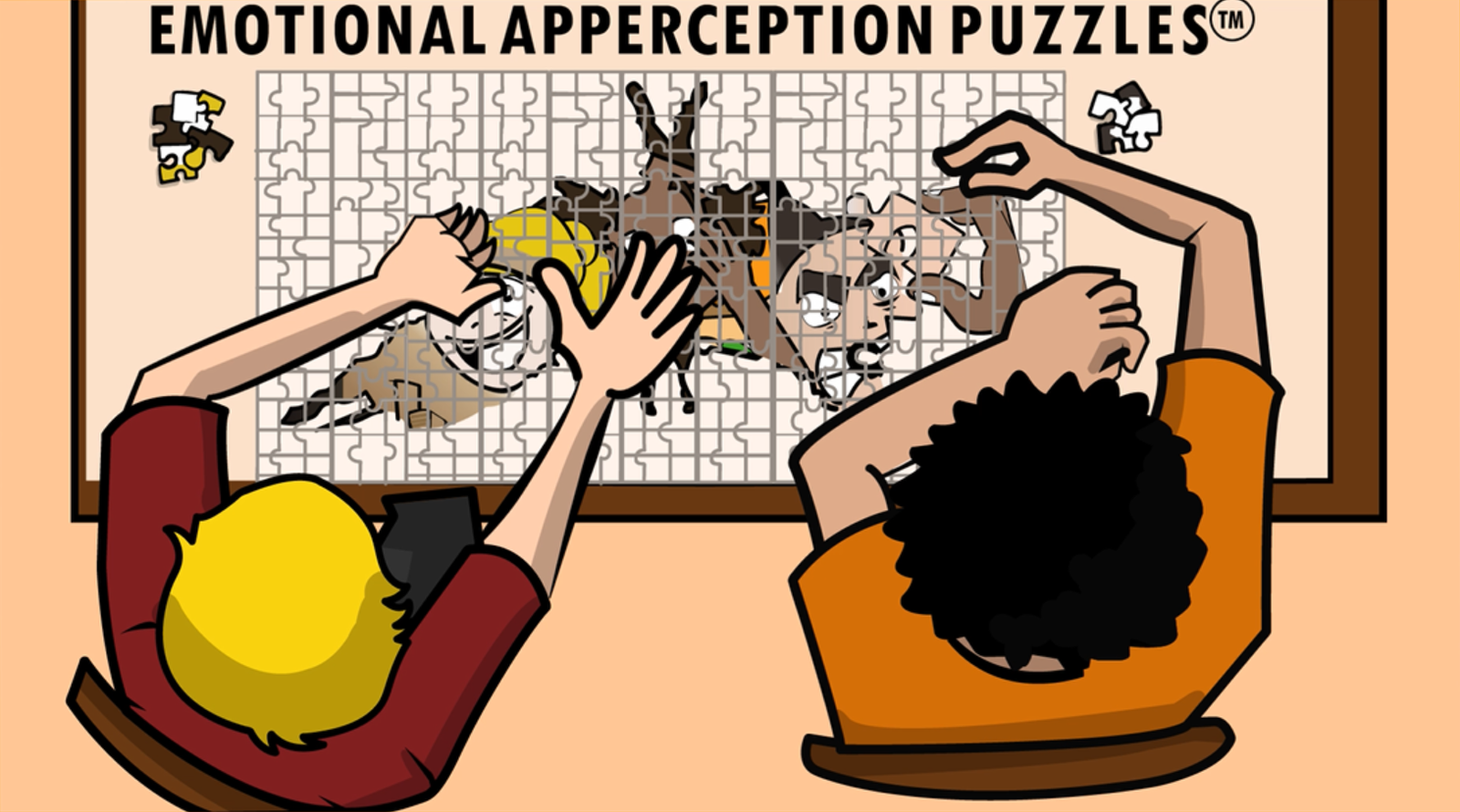
Help children recognize emotions, develop empathy, and strengthen social skills—one picture at a time.

Emotional Identification Puzzles are engaging, picture-based social-emotional learning (SEL) activities designed to help children identify emotions, understand social situations, and improve communication through creative storytelling.
Each puzzle features realistic scenes that encourage children to look closely at facial expressions, body language, and social interactions. Instead of searching for the "right" answer, children use observation, reasoning, and imagination to tell the story they see.
Every puzzle focuses on one of five core emotions, helping children recognize and understand feelings in everyday situations.
Children examine each picture and answer open-ended questions that encourage observation, emotional understanding, and creative thinking.
What do you notice in the picture?
Why do you think they feel that way?
What might have happened before this moment?
How might the story continue?
What could the characters do to resolve the situation?
These activities naturally support children's emotional, social, communication, and thinking skills.
The stories children create can provide valuable insight into how they understand emotions, friendships, family relationships, conflict, and everyday social situations.
Emotional Identification Puzzles can be used across a variety of learning, therapeutic, and social-emotional settings.
Ideal for: classrooms, counseling sessions, therapy, small groups, social skills instruction, and learning at home.
Strong emotional intelligence begins with understanding feelings— both our own and those of others.
Emotional Identification Puzzles help children develop confidence, compassion, communication skills, and emotional awareness through fun, interactive learning they'll enjoy again and again.